
Who Is the Best Football Captain of All Time? 6 Legendary Leaders Ranked
Football has produced many outstanding players, but the greatest captains
are remembered for more than just their performance on the pitch.
They are individuals who inspire their teammates, instill confidence
in the dressing room, and help their team remain completely focused—even
during moments of intense pressure
From lifting the FIFA World Cup to leading famous clubs through unforgettable European campaigns, legendary captains have shaped football history in different ways.
READ MORE: https://sportstitanofficial.com/football-club-most-trophies/
https://x.com/TheAthleticFC/status/2109230403269611736?s=20
So, who is the best football captain of all time?
There is no single answer that every football fan will agree on. However, Franz Beckenbauer has a strong case for the title because of his leadership, tactical intelligence, and achievements with West Germany and Bayern Munich. Other legendary figures, including Paolo Maldini, Carles Puyol, Roy Keane, Sergio Ramos, and John Terry, have also left their mark on the game.
In this guide, we will explore what makes a great football captain, examine the achievements of six iconic leaders, and compare their contributions to club and international football.
What Makes a Great Football Captain?
Wearing the captain’s armband does not automatically make a player a great leader. True captaincy becomes visible in the way a player responds to setbacks, supports teammates, and handles important moments during a match.
The best football captains often share several qualities.
Leadership under pressure: A strong captain helps teammates remain focused when the team is losing or facing a difficult opponent.
Communication: The captain connects the players with the manager and the coaching staff, while also helping everyone understand their responsibilities.
Tactical awareness: Understanding the game allows a captain to recognize problems on the pitch and help the team adjust.
Consistency: Teammates are more likely to trust a leader who performs reliably throughout the season.
Discipline and accountability: Great captains accept responsibility for mistakes and encourage others to maintain professional standards.
The ability to inspire: Sometimes a determined challenge, an important tackle, or a few encouraging words can change the mood of an entire team.
These qualities are difficult to measure through statistics alone. That is why judging football captains requires looking beyond trophies and individual awards.
Who Is the Best Football Captain of All Time?
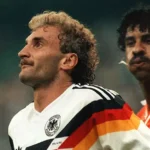
Franz Beckenbauer is one of the strongest candidates for the title of the greatest football captain in history.
Known as Der Kaiser, the German legend changed how people viewed the role of a defender. He combined composure, intelligence, and excellent positioning with the confidence to influence the game from deep positions.
Beckenbauer captained West Germany to victory at the 1974 FIFA World Cup. At club level, he played a central role in Bayern Munich’s rise to European dominance during the 1970s.
His legacy is particularly impressive because he understood that leadership was not simply about motivating teammates. It also involved making intelligent decisions, maintaining control, and helping the team perform as a unit.
Why Franz Beckenbauer Deserves the Recognition
1. He captained West Germany to World Cup glory.
The 1974 FIFA World Cup remains one of the defining achievements of Beckenbauer’s career. As captain, he helped West Germany navigate a demanding tournament and defeat the Netherlands 2–1 in the final.
Winning the World Cup requires outstanding individual ability, but it also demands teamwork, discipline, and mental strength. Beckenbauer played an important role in bringing those qualities together.
2. He helped Bayern Munich dominate Europe.
Beckenbauer was a key figure in Bayern Munich’s successful era during the 1970s. The club won three consecutive European Cups from 1974 to 1976, establishing itself among Europe’s leading teams.
He also won multiple German league titles and domestic honors during his time at Bayern.
3. His understanding of football set him apart.
Beckenbauer became famous for his ability to read the game and contribute to both defense and attack. His role as a sweeper allowed him to organize defensive play while also helping launch attacking moves.
His leadership style was built around intelligence and composure rather than constant confrontation. This combination helped establish his reputation as one of football’s most influential leaders.
6 Greatest Football Captains in History
Choosing the greatest captain is always subjective. Different eras have produced different styles of leadership, and the following six players represent some of the finest examples.
1. Franz Beckenbauer – Germany
Franz Beckenbauer stands out for combining tactical intelligence with major international and club achievements.
As captain, he led West Germany to the 1974 World Cup. At Bayern Munich, he helped the club win three consecutive European Cups, as well as several domestic trophies.
What made Beckenbauer special was his ability to influence a match without relying solely on physical strength or emotional displays. He understood positioning, anticipated danger, and helped teammates maintain their shape.
His calm approach made him a natural leader, while his success at the highest level strengthened his place among football’s all-time greats.
Greatest leadership quality: Tactical intelligence and composure.
2. Paolo Maldini – Italy
Paolo Maldini is widely regarded as one of the finest defenders football has ever produced. He spent his entire senior club career with AC Milan, representing the club for more than two decades.
Maldini won five European Cup or UEFA Champions League titles and seven Serie A championships. His long career at the highest level demonstrated remarkable consistency and commitment.
Unlike more outspoken captains, Maldini often led through his performances. His positioning, anticipation, professionalism, and ability to remain composed in difficult situations earned the respect of teammates and opponents alike.
He also captained AC Milan during important periods of the club’s European success.
Although Italy did not win the World Cup during his international career, Maldini’s achievements at club level make him a serious contender in any discussion about football’s greatest leaders.
Greatest leadership quality: Consistency, professionalism, and leading by example.
3. Carles Puyol – Spain
Carles Puyol became a symbol of determination during Barcelona’s most successful modern era. Known for his aggressive defending and commitment to the team, he was the kind of captain who rarely gave up on a challenge.
Under his leadership, Barcelona won major domestic and European honours, including the UEFA Champions League. His career also coincided with Spain’s golden international period.
Puyol was part of Spain’s squad that won UEFA Euro 2008 and the 2010 FIFA World Cup. His decisive headed goal against Germany in the 2010 World Cup semi-final helped Spain reach their first World Cup final, which they subsequently won.
His leadership was built on courage, loyalty, and a willingness to put the team’s needs first. Even when Barcelona had technically gifted players across the pitch, Puyol’s defensive commitment provided an important foundation.
Greatest leadership quality: Determination and team-first mentality.
4. Roy Keane – Republic of Ireland
Roy Keane brought a demanding and uncompromising style of leadership to Manchester United. As captain during a highly successful period under Sir Alex Ferguson, he expected his teammates to maintain high standards in training and competition.
Keane was not known for hiding his emotions. His intensity could create tension, but it also reflected his belief that every player had a responsibility to contribute.
He played an important role in Manchester United’s domestic dominance and their 1999 UEFA Champions League triumph. His performance against Juventus in the semi-final second leg that season remains a memorable example of his determination, even though he missed the final through suspension.
Keane’s approach was very different from Beckenbauer’s calm authority or Maldini’s understated professionalism. Yet his influence demonstrated how demanding leadership can help establish a competitive culture.
Greatest leadership quality: Intensity, accountability, and competitive spirit.
5. Sergio Ramos – Spain
Sergio Ramos combined defensive aggression with an unusual ability to score important goals. His leadership at Real Madrid helped define an era in which the club achieved extraordinary success in European competition.
As Real Madrid captain, Ramos lifted the UEFA Champions League trophy in 2016, 2017, and 2018. He also won multiple La Liga titles during his time with the club.
Internationally, Ramos was part of Spain’s teams that won the 2010 FIFA World Cup and UEFA European Championships in 2008 and 2012.
One of his most memorable moments came in the 2014 Champions League final against Atlético Madrid. His stoppage-time equaliser forced extra time, helping Real Madrid eventually secure their tenth European Cup, known as La Décima.
Ramos was never just a defender who focused on stopping attacks. His ability to contribute goals in high-pressure situations made him a particularly influential figure.
Greatest leadership quality: Confidence and performing in decisive moments.
6. John Terry – England
John Terry was one of the defining leaders of Chelsea’s successful period under several managers, particularly during the club’s rise to domestic and European prominence in the 2000s and early 2010s.
As captain, he helped Chelsea win multiple Premier League titles and FA Cups. He was also captain when Chelsea won the UEFA Champions League in 2012, although he missed the final through suspension.
Terry’s greatest strength was his ability to organize a defence. He read danger, communicated with teammates, and put his body on the line to prevent goals.
His leadership suited a team that relied on defensive organization and resilience during important matches. While opinions about individual captains will always differ, Terry’s influence on Chelsea’s identity during that period is difficult to overlook.
Greatest leadership quality: Defensive organization and commitment.
Comparing Football’s Greatest Captains
The following table highlights the achievements that make these players stand out.
| Captain | Country | Major achievement |
|---|---|---|
| Franz Beckenbauer | West Germany | Captained his country to the 1974 World Cup |
| Paolo Maldini | Italy | Five European Cup/Champions League titles |
| Carles Puyol | Spain | World Cup and Champions League winner |
| Roy Keane | Republic of Ireland | Captained Manchester United during its successful era |
| Sergio Ramos | Spain | World Cup winner and multiple-time Champions League winner |
| John Terry | England | Captained Chelsea during major domestic and European triumphs |
Each player represents a different approach to leadership. Beckenbauer was admired for his tactical understanding, Maldini for his consistency, Puyol for his determination, Keane for his intensity, Ramos for his decisive contributions, and Terry for his defensive organization.
There is no universally accepted method for ranking these qualities. A supporter who values international trophies may choose a different captain from someone who places greater importance on longevity at club level.
What Makes Football Captaincy Different From Individual Greatness?
A player can be technically brilliant without being an exceptional captain. Scoring goals, creating chances, and winning individual awards are important achievements, but leadership involves additional responsibilities.
A captain must understand the needs of the team and respond appropriately to different situations. When a young player makes a mistake, the captain may need to restore their confidence. When the team loses control of a match, the captain may need to encourage better positioning and communication.
There is also a responsibility to represent the team publicly and maintain a professional relationship with the manager and officials.
The most effective leaders do not necessarily have the loudest voices. Some motivate through emotional speeches, while others earn respect by working hard and remaining calm.
This is why the debate about the best football captain of all time cannot be settled by looking at trophy totals alone.
Why Football Captains Still Matter in the Modern Game
Modern football places enormous demands on players. Matches are faster, tactical systems are more detailed, and teams must adapt quickly when their original plans stop working.
Captains continue to play an important role in several areas.
Managing pressure: A captain helps teammates stay focused during difficult periods, especially in knockout matches and title races.
Supporting younger players: Experienced leaders help emerging players adjust to the demands of professional football.
Communicating with the referee: Captains often serve as the main point of contact when decisions need to be discussed respectfully.
Maintaining team standards: They help reinforce the manager’s expectations regarding effort, discipline, and teamwork.
Building a shared identity: A respected captain can strengthen the connection between players, supporters, and the club.
Although modern football managers have greater access to tactical data and communication tools, the human side of leadership remains essential.
Frequently Asked Questions
Who is the best football captain of all time?
Franz Beckenbauer is a leading candidate because he captained West Germany to the 1974 FIFA World Cup and helped Bayern Munich win three consecutive European Cups. However, Paolo Maldini, Carles Puyol, and other legendary captains also have strong claims.
Which football captain has won the most Champions League titles?
The answer depends on whether you mean a player’s total career wins or trophies won specifically as captain. Paolo Maldini won five European Cup/UEFA Champions League titles with AC Milan, while Sergio Ramos won four with Real Madrid. Their captaincy records are different from their overall career totals.
Who was the captain of West Germany in the 1974 World Cup?
Franz Beckenbauer captained West Germany when the team won the 1974 FIFA World Cup, defeating the Netherlands 2–1 in the final.
Why is Paolo Maldini considered a great captain?
Maldini earned respect through his consistency, defensive intelligence, professionalism, and long association with AC Milan. His five European Cup/Champions League titles and seven Serie A championships are central to his legacy.
Was Sergio Ramos a successful football captain?
Yes. Ramos captained Real Madrid during three consecutive Champions League-winning campaigns from 2016 to 2018. He was also part of Spain’s World Cup-winning squad in 2010 and its European Championship-winning teams in 2008 and 2012.
What qualities should a great football captain have?
A great captain needs strong communication, tactical awareness, discipline, emotional control, consistency, and the ability to motivate teammates. Most importantly, a captain must earn the trust and respect of the players they lead.
Conclusion
So, who is the best football captain of all time? Franz Beckenbauer remains one of the strongest choices because of his World Cup-winning leadership, European success with Bayern Munich, and remarkable understanding of the game.
However, football has never had just one model of great leadership. Paolo Maldini showed how consistency and professionalism can inspire a team. Carles Puyol brought determination and courage, Roy Keane demanded accountability, Sergio Ramos delivered in decisive moments, and John Terry provided defensive organization.
Their careers demonstrate that successful captaincy is about much more than lifting trophies. It requires earning trust, taking responsibility, and helping teammates perform when the pressure is greatest.
Ultimately, the greatest football captain is the one whose leadership makes the entire team better. Beckenbauer may be your choice, or you may prefer another legendary figure, but the impact of these captains continues to shape how football understands leadership today.






2 thoughts on “Who Is the Best Football Captain of All Time? The Greatest Leaders in Football History”