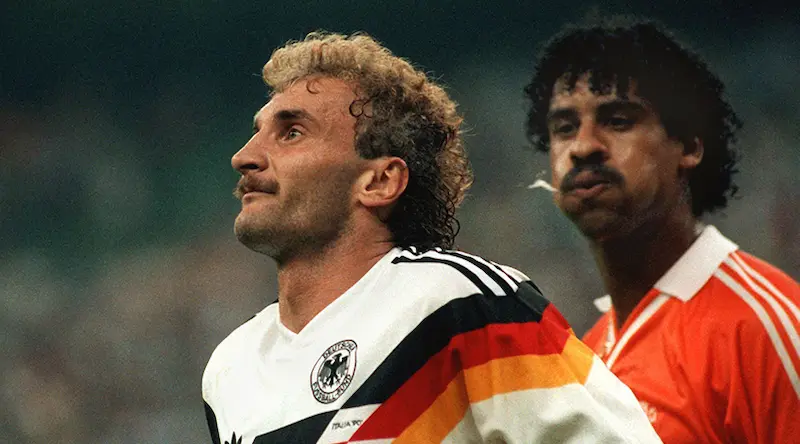
Football rivalries extend far beyond the 90 minutes spent on the pitch. They are woven into the memories of generations, divide families, define the identity of cities, and transform ordinary league matches into events that supporters remember for decades. Some rivalries arise from geographical proximity, while others reflect political history, social divisions, or intense battles between clubs vying for the most prestigious trophies.
But which one deserves to be called the greatest rivalry in football history?
There is no universally accepted answer. Real Madrid versus Barcelona has worldwide recognition, Boca Juniors versus River Plate brings extraordinary emotion to Argentine football, and Celtic versus Rangers carries a history that reaches far beyond the stadium. Each rivalry has a different character, making direct comparisons difficult.
When discussing the Greatest Football Rivalries, it is important to look beyond popularity. Historical significance, competitive quality, supporter culture, memorable matches, and influence on the wider game all help explain why certain fixtures have become legendary.
READ MORE: https://sportstitanofficial.com/who-is-the-best-football-captain-of-all-time/
https://x.com/FTBLsection/status/2081190263909982432?s=20
What Makes a Football Rivalry Truly Great?
Not every match between two famous clubs becomes a historic rivalry. The strongest rivalries develop over time, usually through repeated competition, contrasting identities, and moments that supporters never forget.
Several factors help distinguish an ordinary fixture from one of football’s defining contests.
1. History and tradition
Long-standing rivalries connect present-day supporters with earlier generations. A result from decades ago can still influence the atmosphere surrounding a modern match. Old victories become family stories, while painful defeats remain part of a club’s identity.
2. Competitive importance
Rivalries become even more intense when trophies, league positions, or qualification for major competitions are at stake. A derby that decides a championship can become far more memorable than a routine meeting.
3. Supporter culture
Chants, colours, traditions, stadium displays, and matchday rituals give rivalries their distinctive character. The atmosphere created by supporters often makes these fixtures feel different from any other match on the calendar.
4. Quality of football
Great players and tactical battles add another dimension. When two leading teams repeatedly produce outstanding performances, their rivalry attracts attention from supporters who may not even follow either club.
These qualities provide a useful framework for comparing the greatest football rivalries without pretending that one statistic can settle the debate.
1. Real Madrid vs Barcelona: El Clásico
Few club fixtures have achieved the international profile of El Clásico, the contest between Real Madrid and Barcelona. The two Spanish giants represent different sporting identities and have spent generations competing for domestic honors and European recognition.
Barcelona was founded in 1899, while Real Madrid was established in 1902. Their first meeting took place in 1902, before Spain’s national league was created. Their first La Liga encounter followed in February 1929, when Real Madrid won 2–1.
More than a football match
Barcelona has long been associated with Catalan identity, while Real Madrid has often been connected with Spain’s national sporting establishment. These associations matter when discussing the clubs’ history, although neither club nor its supporters can be reduced to a single political viewpoint.
The rivalry also contains plenty of sporting drama independent of politics. Battles involving Alfredo Di Stéfano, Johan Cruyff, Ronaldinho, Lionel Messi, Cristiano Ronaldo, and many others have helped make El Clásico a showcase for different generations of footballing talent.
Some matches have become part of the sport’s collective memory. Barcelona’s 5–0 victory at the Santiago Bernabéu in 1974 and its 5–0 win in 2010 demonstrated how one team’s tactical superiority can turn a high-pressure fixture into a defining performance.
The arrival of Messi and Ronaldo in the same era gave the contest another global dimension. Their individual achievements and contrasting styles attracted audiences well beyond Spain.
Why El Clásico stands out
Its combination of elite players, championship consequences, international broadcasting, and historical significance makes El Clásico a leading candidate in discussions about the Greatest Football Rivalries.
However, global visibility does not automatically make a rivalry the most emotionally intense. Other fixtures may have deeper local roots or stronger connections to a particular community’s history.
2. Boca Juniors vs River Plate: Argentina’s Superclásico
In Buenos Aires, the Superclásico between Boca Juniors and River Plate is one of the most emotionally charged events in Argentine sport.
As the clubs evolved, they became symbols of distinct supporter traditions and social affiliations. In the public imagination, ‘River’ is often associated with a more affluent image, while ‘Boca’ is traditionally linked to the culture of working-class neighborhoods. Rather than being governed by rigid rules, these associations reflect broader historical ties—which do not, however, dictate why an individual might choose to support a particular club.
A rivalry powered by atmosphere
The Superclásico is famous for its intense stadium atmosphere. Supporters fill the stands with club colors, coordinated chants, and displays that turn the occasion into a city-wide event.
The tension is also shaped by the knowledge that one result can dominate conversations for months. Winning against a major rival provides more than three league points; it offers bragging rights and a moment supporters can carry into everyday life.
The clubs have also met in important continental competitions. Their 2018 Copa Libertadores final was particularly significant because the rivals faced each other for South America’s most prestigious club trophy.
That unusual final demonstrated how the rivalry could command international attention even when circumstances took the match far from Argentina.
Why it belongs in the conversation
The Superclásico combines historical roots, intense supporter loyalty, and meaningful sporting consequences. For many followers of South American football, its atmosphere makes it a serious contender among the Greatest Football Rivalries.
Its appeal is not simply about which club has won more matches. It is about the emotional importance of the fixture to the people who follow it.
3. Celtic vs Rangers: The Old Firm Derby
The rivalry between Celtic and Rangers in Glasgow is one of the most historically significant fixtures in British football.
The clubs first met in a friendly on 28 May 1888, the day Celtic played its inaugural match. Celtic won 5–2. What began as a sporting contest developed into one of the most closely watched derbies in Scotland.
Both clubs built enormous followings and became dominant forces in Scottish football. Their repeated battles for league titles and domestic cups created a rivalry in which individual results could have consequences for an entire season.
Religion, identity, and football
The Old Firm has a complicated social history. Celtic grew out of Glasgow’s Irish Catholic community, while Rangers became strongly associated with Protestant and unionist traditions. These identities have contributed to the rivalry’s intensity, although supporters’ beliefs and backgrounds are diverse and should not be assumed from the club they support.
The fixture has also experienced serious episodes of disorder and sectarian hostility. Understanding its history means recognizing these realities rather than romanticizing every aspect of the rivalry.
At the same time, the sporting side remains central. The clubs have produced memorable title races, cup finals, outstanding players, and performances that shaped Scottish football across different generations.
What makes this derby distinctive?
Unlike El Clásico, the Old Firm is rooted in the same city. Supporters can encounter the rival club’s colors and conversations in everyday life, making the rivalry a constant presence rather than an occasional national event.
Its longevity and social significance give it a strong place among the Greatest Football Rivalries, particularly for anyone interested in the relationship between football, community identity, and history.
4. Manchester United vs Liverpool
The rivalry between Manchester United and Liverpool combines footballing competition with the historical relationship between two major English cities.
Manchester and Liverpool developed as important centres of industry and commerce. Their economic and cultural competition helped shape a broader sense of regional rivalry, although football is only one part of that history.
On the pitch, the clubs have repeatedly competed for domestic trophies and European recognition. Liverpool dominated significant periods of English football during the 1970s and 1980s, while Manchester United enjoyed an extraordinary period of domestic success under Alex Ferguson, particularly during the Premier League era.
Those contrasting periods created an additional layer of competition. Each club’s supporters have watched the other collect trophies while measuring their own team’s achievements against its rival.
A rivalry built on legacy
The fixture has featured famous players, dramatic comebacks, controversial moments, and important league encounters. It also attracts attention because of the size of both clubs’ supporter bases.
For Manchester United and Liverpool, success is often judged against the achievements of the other. A major trophy can strengthen a club’s historical standing, while a disappointing season gives rival supporters material for years of debate.
The clubs’ different periods of dominance mean that the rivalry cannot be understood through one season or a single head-to-head statistic. Its significance comes from the accumulated weight of decades of competition.
5. AC Milan vs Inter Milan: The Derby della Madonnina
Milan’s two leading clubs share a city and the iconic San Siro stadium, making the Derby della Madonnina one of European football’s most recognisable local contests.
AC Milan and Inter Milan have competed in Italian football for generations. Their meetings have involved domestic championships, Coppa Italia ties, and European nights that have attracted attention from across the continent.
The derby’s name refers to the statue of the Madonna atop Milan Cathedral. The city’s landmarks and shared stadium give the fixture a distinct sense of place.
When the same stadium becomes rival territory
Although both clubs have traditionally used San Siro as their home ground, the stadium takes on a different atmosphere depending on which team is officially hosting the match. Supporters create contrasting displays, and the contest becomes a battle for local pride.
The rivalry has also reached the highest level of European competition. In the 2002–03 Champions League semi-final, the two sides met over two legs. Both matches finished level, but AC Milan progressed on the away-goals rule and went on to win the tournament.
They met again in the 2023 Champions League semi-finals, with Inter winning both legs and reaching the final.
These encounters show how a city derby can become a major European event without losing its local character.
6. Arsenal vs Tottenham Hotspur: The North London Derby
The North London Derby between Arsenal and Tottenham Hotspur is one of English football’s most recognisable local rivalries.
Its modern history developed as Arsenal established a presence in north London after moving from Woolwich to Highbury in 1913. That relocation brought the club into Tottenham’s broader geographical territory and helped create a rivalry that has lasted for generations.
The contest is driven by proximity. Supporters live, work, and socialise in the same part of London, yet follow opposing clubs. A derby victory therefore carries a particular local significance.
Why league position is not everything
The teams have often entered the derby with different ambitions. At times, one club has challenged for major honours while the other has focused on securing European qualification or improving its league position.
Nevertheless, the match matters even when the clubs are far apart in the table. Supporters want to finish above their rivals, win bragging rights, and avoid giving the opposition a memorable result.
The rivalry demonstrates an important feature of football culture: local identity can make a fixture meaningful even when a championship is not directly at stake.
7. Brazil vs Argentina: A Rivalry Between Footballing Nations
Club football does not own the concept of rivalry. International football has its own historic contests, and Brazil versus Argentina is among South America’s most famous.
Both countries have produced generations of exceptional players and won major international honours. Their meetings often become debates about style, talent, national pride, and the relative standing of two footballing traditions.
Brazil has been associated with expressive attacking play, while Argentina has produced teams known for technical quality, tactical adaptability, and fierce competitiveness. These are broad descriptions, not fixed rules, because both nations have played in many different styles throughout their histories.
The rivalry has featured stars such as Pelé, Diego Maradona, Lionel Messi, and numerous other influential players. Their performances have helped turn individual matches into moments with lasting cultural significance.
Unlike a club derby, this rivalry does not depend on two teams meeting every season. International schedules can make encounters less frequent, increasing anticipation when the sides are drawn together in a major tournament or continental competition.
Its scale shows why the Greatest Football Rivalries cannot be judged only by club football. National-team contests can carry the expectations of entire countries, particularly when continental titles or World Cup qualification are involved.
So, Which Rivalry Is the Greatest?
The answer depends on what a supporter values most.
El Clásico has a powerful case because of its global reach, elite players, historic competition, and repeated battles for major trophies. The Superclásico offers a different kind of intensity, with extraordinary local passion and a deeply rooted place in Argentine sporting culture. The Old Firm stands out for its longevity and complex social history.
Manchester United versus Liverpool represents a historic contest between two English football giants. AC Milan versus Inter combines local pride with European success, while Arsenal versus Tottenham illustrates the lasting power of a city rivalry. Brazil versus Argentina brings national identity into the discussion.
These fixtures are not interchangeable. Each developed under different circumstances, and each means something different to its supporters.
A useful way to compare the Greatest Football Rivalries is to consider five questions: How long has the rivalry lasted? How important are the matches competitively? How strongly does it shape supporter identity? How many memorable moments has it produced? And how much influence does it have beyond its own league or country?
There is no single formula that can turn those qualities into a definitive winner. Statistics can measure results and trophies, but they cannot fully measure the emotion of a last-minute goal, the relief of a derby victory, or the disappointment of losing to a neighbour.
Conclusion
The greatest rivalry in football history remains a matter of perspective, not a title that can be awarded through one universal calculation.
El Clásico may be the strongest choice for readers who value global recognition and elite club competition. The Superclásico may appeal more to those who value raw atmosphere and local passion, while the Old Firm offers a particularly revealing example of football’s connection with history and identity.
Ultimately, the Greatest Football Rivalries are the ones that make a match matter beyond the final score. They preserve memories, shape generations of supporters, and remind us why football can inspire such extraordinary loyalty. Whether the contest takes place in Madrid, Buenos Aires, Glasgow, Manchester, Milan, London, or on the international stage, its lasting importance comes from the people and stories that give it meaning.









1 thought on “Top 10 Greatest Football Rivalries That Define the Beautiful Game”