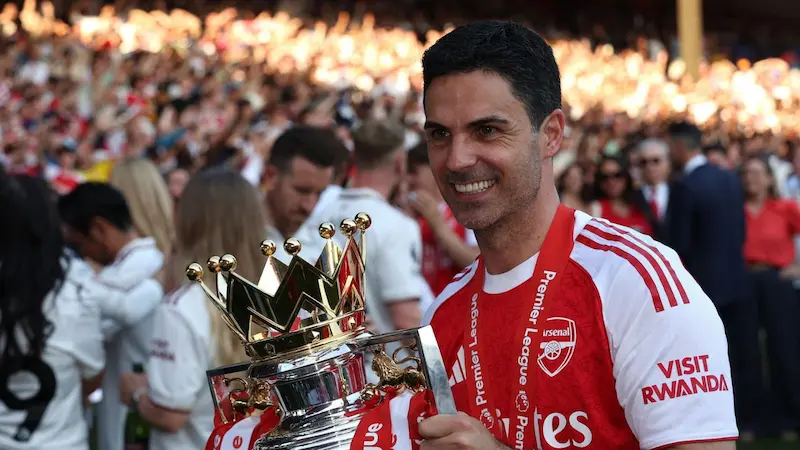
Winning football trophies requires more than just signing talented players.
It demands strategic insight, strong leadership, and the selection of the
right personnel, and the ability to perform well under pressure—especially
when an entire season is on the line. In the Premier League, where
Competition is fierce, and expectations are sky-high; only a few managers
have managed to leave behind a legacy that has truly stood the test of
time.
From Manchester United's dominance under Sir Alex Ferguson to Manchester
City's record-breaking achievements under Pep Guardiola, great managers
have transformed clubs into winning machines. Arsène Wenger changed
English football with his approach to fitness and attacking play,
while José Mourinho brought tactical discipline and an immediate winning
mentality to Chelsea.
But who deserves a place among the most successful Premier League managers in history?
This article explores five legendary names, their major achievements, their defining seasons, and the qualities that made them so successful. The ranking considers overall managerial achievements with Premier League clubs, including league titles and major domestic and European trophies, rather than Premier League championships alone.
Important distinction: Trophy totals can vary between sources depending on whether the Community Shield, European Super Cup, and other super cups are included. This article focuses on established achievements and clearly distinguishes league titles from wider trophy success.
READ MORE: https://sportstitanofficial.com/rain-affected-cricket-match-rules/ https://x.com/OfficialFPL/status/2109630180251550079?s=20
1. Sir Alex Ferguson—Manchester United’s Greatest Ever Winner
Sir Alex Ferguson stands at the top of almost every serious discussion about English football management. His achievements at Manchester United combined longevity, consistency, and an extraordinary ability to rebuild successful teams across different eras.
Premier League titles: 13
Ferguson won 13 Premier League titles with Manchester United between 1992–93 and 2012–13. No other manager has come close to matching that record. He also led United to two UEFA Champions League titles, five FA Cups, and four League Cups, alongside other honors.
His first Premier League championship arrived in 1992–93, ending Manchester United’s 26-year wait for an English top-flight title. That victory established the foundation for a period of dominance that would define the competition for the next two decades.
The 1998–99 treble changed everything.
One of Ferguson’s greatest achievements came during the 1998–99 season. Manchester United won the Premier League, FA Cup, and UEFA Champions League, becoming the first English club to complete that historic treble.
The Champions League final against Bayern Munich remains one of football’s most memorable matches. United scored twice in stoppage time to turn defeat into victory, demonstrating the never-give-up mentality that became closely associated with Ferguson’s teams.
His success was not limited to one generation of players. He built different championship-winning sides around stars such as Eric Cantona, David Beckham, Ryan Giggs, Roy Keane, Cristiano Ronaldo, and Wayne Rooney.
What made Ferguson so successful?
Ferguson’s greatest strength was his ability to recognize when a team needed rebuilding. Rather than relying indefinitely on one successful group of players, he regularly introduced younger talent and refreshed the squad.
He also understood the psychological side of football. His teams were expected to keep fighting until the final whistle, and that mentality helped United collect crucial points during difficult periods.
According to the Premier League’s official records, Ferguson finished his managerial career with 528 Premier League victories from 810 matches.
Legacy: Ferguson remains the benchmark against which other Premier League managers are measured. His longevity, tactical flexibility, and unwavering ambition make him the most compelling contender to be the greatest manager in Premier League history.
2. Pep Guardiola – The Architect of Manchester City’s Modern Dynasty
Manchester City is now among the most powerful teams in English football history thanks to Pep Guardiola. His emphasis on positional play, intelligent movement, technical ability, and controlling possession has influenced how teams across the world approach the game.
Premier League titles: 6
Guardiola won six Premier League titles with Manchester City, including four consecutive championships from 2020–21 through 2023–24. His achievements place him second behind Ferguson in the number of Premier League titles won by a manager.
His influence became especially clear in the 2017–18 campaign, when City collected 100 points, setting a Premier League record. The team scored 106 goals and won 32 matches, demonstrating an extraordinary combination of attacking power and consistency.
City retained the title in 2018–19, becoming the first men’s team to win consecutive English top-flight championships since Manchester United in 2008–09.
The historic treble of 2022–23
Guardiola reached another landmark in 2022–23. Manchester City won the Premier League, FA Cup, and UEFA Champions League, matching Manchester United’s famous treble from 1998–99.
The Champions League victory was particularly important because it delivered the European trophy City had pursued for years. It also confirmed Guardiola’s ability to adapt his tactical approach and guide his team through the demanding final stages of elite European competition.
In 2023–24, City became the first club to win four consecutive English top-flight titles. That achievement further strengthened Guardiola’s place among the game’s most influential modern coaches.
Why Guardiola’s football stands out
Guardiola’s teams aim to control matches through possession, passing angles, movement, and positioning. Players are expected to understand not just where the ball is, but where they need to be to create space or prevent counterattacks.
His tactical approach is not simply about keeping possession for its own sake. The objective is to move opponents out of position, create high-quality chances, and limit the opposition’s opportunities to attack.
He has also shown a willingness to evolve. Cities have adjusted their formations, defensive structures, and attacking patterns to suit different players and opponents.
Legacy: Guardiola’s sustained domestic dominance and Champions League success have made him one of the most decorated managers to work in English football. Although Ferguson still leads the Premier League title count, Guardiola has established a compelling legacy of his own.
3. Arsène Wenger – The Manager Who Changed English Football
Arsène Wenger’s influence extends well beyond the trophies he won at Arsenal. When he arrived in English football in 1996, his ideas about nutrition, training, player development, and tactical preparation challenged established practices and helped reshape the modern game.
Premier League titles: 3
Wenger won three Premier League titles with Arsenal in 1997–98, 2001–02, and 2003–04. He also won seven FA Cups, making him the most successful manager in the competition’s history by FA Cup victories.
His first championship in 1997–98 established Arsenal as a serious challenger to Manchester United. The team combined defensive organization with fast, intelligent attacking football, led by influential players such as Tony Adams, Patrick Vieira, Dennis Bergkamp, and Ian Wright.
The 2001–02 campaign delivered another league and FA Cup double, demonstrating Wenger’s ability to build teams capable of performing consistently in different competitions.
The Invincibles: An achievement that still stands out
Wenger’s defining achievement came in the 2003–04 season, when Arsenal completed the Premier League campaign unbeaten.
The Gunners won 26 matches and drew 12, finishing the 38-game season without a single defeat. The side became known as the Invincibles, a name that remains central to Arsenal’s identity.
Thierry Henry supplied exceptional attacking quality, Bergkamp brought creativity, Vieira controlled midfield, and the defense provided the resilience required to survive difficult matches.
The achievement was not merely about avoiding defeat. Arsenal played with confidence, pace, and technical quality, often turning difficult fixtures into opportunities to demonstrate their superiority.
Wenger’s lasting contribution
Wenger helped make English football more international in its outlook. His recruitment brought talented players from different countries into the Premier League, while his emphasis on diet, conditioning, and preparation influenced clubs throughout the competition.
His Arsenal teams also demonstrated that attractive attacking football could coexist with consistent trophy-winning performances.
Although Arsenal’s later years under Wenger produced fewer league championships, his 22-season tenure established remarkable continuity and helped shape the club’s modern identity.
Legacy: Wenger belongs among the most successful Premier League managers because his impact was both measurable and cultural. His three league titles, seven FA Cups, and unbeaten championship campaign form one of the most distinctive managerial records in English football.
4. José Mourinho – The Master of Tactical Discipline
José Mourinho arrived at Chelsea in 2004 with a reputation for confidence and a winning record in European football. He quickly turned that reputation into results, delivering Premier League titles and establishing Chelsea as a major force in English football.
Premier League titles: 3
Mourinho won three Premier League titles with Chelsea: 2004–05, 2005–06, and 2014–15. His first two championships came in successive seasons, immediately establishing a new standard for the club.
Chelsea’s 2004–05 campaign was particularly impressive. The team conceded just 15 goals across the league season, a record for a 38-match Premier League campaign, and lost only one match.
That defensive strength was supported by a powerful squad featuring John Terry, Frank Lampard, Claude Makélélé, Didier Drogba, and Petr Čech. Each player had a clear role, and the team was exceptionally effective at protecting leads.
Building Chelsea into champions
Mourinho understood that successful teams need more than talented individuals. They need structure, discipline, and a shared understanding of how to respond to different situations.
Chelsea were comfortable defending compactly, pressing at carefully selected moments, and attacking quickly when opportunities appeared. Their approach was difficult to break down and especially effective in high-pressure matches.
His third Premier League title came in 2014–15. Chelsea finished eight points ahead of Manchester City, with the team combining defensive organisation with consistent performances throughout the season.
Mourinho’s managerial career also includes success in domestic cups and European competitions with clubs outside England. His overall trophy collection is therefore broader than his Premier League record alone.
What separates Mourinho from other managers?
Mourinho’s greatest strength has often been his ability to develop a tactical plan around the specific challenge in front of him. He has managed teams with different styles, but his best sides have shared a clear identity and a strong competitive mentality.
He also excels at creating a sense of unity within a squad, especially when players understand the responsibilities expected of them. At Chelsea, this approach produced immediate results and helped establish a winning culture.
Legacy: Mourinho’s three Premier League titles, two separate successful spells at Chelsea, and reputation for tactical preparation make him one of the defining managers of the competition’s modern era.
5. Jürgen Klopp – The Man Who Restored Liverpool’s Glory
Jürgen Klopp’s Liverpool career was built on intensity, emotional connection, and a relentless approach to attacking football. When he took charge in 2015, Liverpool had not won the Premier League. By the end of his tenure, the club had claimed its first championship of the Premier League era.
Klopp won the Premier League with Liverpool in 2019–20, ending the club’s 30-year wait for an English league championship. His team finished 18 points ahead of second-placed Manchester City.
Liverpool had been building toward that moment for several seasons. In 2018–19, they collected 97 points but finished second behind Manchester City, despite losing just one league match.
Rather than allowing that disappointment to derail the project, Klopp’s side returned stronger. Liverpool won their first eight league matches of the 2019–20 season and maintained an exceptional level of performance before the campaign was interrupted by the COVID-19 pandemic.
When football resumed, Liverpool completed the job and secured the title with seven matches remaining.
The importance of gegenpressing
Klopp became closely associated with gegenpressing, a tactical approach in which players attempt to win the ball back immediately after losing possession.
The idea is simple but demanding: when opponents recover the ball, they often have less time to organise their next move. By pressing aggressively, Liverpool could force mistakes, recover possession in dangerous areas, and create chances before the opposition defence was ready.
Players such as Mohamed Salah, Sadio Mané, Roberto Firmino, Virgil van Dijk, and Trent Alexander-Arnold became central to this system.
Klopp’s Liverpool also won the UEFA Champions League in 2018–19 and the FA Cup and League Cup in 2021–22. These successes underline why his legacy cannot be judged by league titles alone.
More than trophies
Klopp rebuilt Liverpool’s confidence and reconnected the team with its supporters. His energetic personality, emotional celebrations, and belief in collective effort made him an important figure in the club’s modern history.
His teams were known for playing with urgency, but their success depended on more than running and pressing. Liverpool developed strong attacking combinations, improved defensive organisation, and recruited players who suited the manager’s system.
Legacy: Klopp’s single Premier League title may appear modest compared with Ferguson’s or Guardiola’s records, but its significance was enormous. He ended a historic wait and built a Liverpool side capable of competing consistently for the biggest honours.
Comparing the Top 5 Premier League Managers
The following table separates Premier League titles from broader trophy achievements. Overall trophy totals should not be compared without checking which competitions each source includes.
| Rank | Manager | Main Premier League club | Premier League titles |
|---|---|---|---|
| 1 | Sir Alex Ferguson | Manchester United | 13 |
| 2 | Pep Guardiola | Manchester City | 6 |
| 3 | Arsène Wenger | Arsenal | 3 |
| 4 | José Mourinho | Chelsea | 3 |
| 5 | Jürgen Klopp | Liverpool | 1 |
League-title figures reflect the established records for these managers. The ranking beyond the top two is an editorial selection based on a combination of domestic success, major honours, influence, and legacy rather than a strict ranking by total trophies.
What Do the Greatest Managers Have in Common?
Although these five managers developed different philosophies, their careers reveal several shared principles.
1. They build teams, not just starting elevens
Championships require depth. Injuries, suspensions, fixture congestion, and changes in form make it difficult for a club to depend on the same 11 players throughout a season.
Ferguson repeatedly rebuilt his squads, Guardiola adapted his tactical structures, Wenger developed technically gifted players, Mourinho organised balanced teams, and Klopp built a system around coordinated pressing.
2. They adapt when football changes
The Premier League has evolved considerably since 1992. Training methods, sports science, recruitment, tactical analysis, and the physical demands of the competition have all changed.
The managers who achieved sustained success found ways to adapt without losing their core principles. They understood that a successful system must evolve as opponents become better prepared to counter it.
3. They manage pressure as well as tactics
A team can play excellent football and still fail to win trophies if it cannot handle pressure. Title races demand concentration over many months, while cup competitions can be decided by a single mistake.
Great managers prepare their players for these moments. They establish expectations, manage confidence, and encourage their squads to remain focused even after setbacks.
4. They leave a lasting influence
The impact of a great manager continues after the final whistle of their final match. Ferguson shaped Manchester United’s modern identity, Guardiola influenced tactical thinking worldwide, Wenger transformed Arsenal’s football culture, Mourinho popularised a highly structured approach to big matches, and Klopp restored Liverpool’s belief in championship success.
That wider influence is one reason the debate about the most successful Premier League managers is about more than medals alone.
Who Is the Greatest Premier League Manager of All Time?
If the main measurement is Premier League titles, Sir Alex Ferguson is the clear leader. His 13 championships remain unmatched, and his ability to maintain Manchester United’s competitiveness across different generations is an extraordinary achievement.
Guardiola is the strongest modern challenger. His six league titles and unprecedented run of four consecutive championships show how dominant a well-built, tactically sophisticated team can become.
Wenger’s unbeaten season remains one of the competition’s most remarkable achievements, Mourinho’s Chelsea teams set new standards for defensive organisation, and Klopp’s Liverpool ended one of English football’s longest championship waits.
The answer ultimately depends on what a supporter values most: longevity, tactical innovation, peak dominance, cup success, or the ability to transform a club’s fortunes.
Still, one point is difficult to dispute. These managers helped define the Premier League’s greatest eras, and their achievements provide a standard against which future generations will be judged.
Conclusion
The history of the Premier League is filled with talented players and memorable teams, but managers have played a decisive role in turning potential into lasting success.
Sir Alex Ferguson’s record of 13 titles places him at the top of the league’s managerial history. Pep Guardiola has built an exceptional Manchester City dynasty, while Arsène Wenger, José Mourinho, and Jürgen Klopp have each left a distinctive mark on English football.
Their careers demonstrate that there is no single formula for winning. Some rely on long-term squad development, others on tactical innovation, and others on creating a powerful collective mentality. The common factor is their ability to make teams perform consistently when the stakes are highest.
For anyone exploring the most successful Premier League managers, these five names provide an essential starting point. Their trophies tell part of the story; their influence on clubs, supporters, and the evolution of football explains why their legacies continue to matter.
Frequently Asked Questions (FAQs)
Who has won the most Premier League titles as a manager?
Sir Alex Ferguson holds the record with 13 Premier League titles, all won with Manchester United.
How many Premier League titles has Pep Guardiola won?
Pep Guardiola has won six Premier League titles with Manchester City, including four consecutive championships from 2020–21 to 2023–24.
How many Premier League titles did Arsène Wenger win?
Arsène Wenger won three Premier League titles with Arsenal. His 2003–04 side completed the entire league season unbeaten.
How many Premier League titles did José Mourinho win?
José Mourinho won three Premier League titles, all with Chelsea, across the 2004–05, 2005–06, and 2014–15 seasons.
Did Jürgen Klopp win the Premier League with Liverpool?
Yes. Klopp led Liverpool to the 2019–20 Premier League title, the club’s first championship since the competition began in 1992.
Are Premier League titles the same as total trophies?
No. Premier League titles refer only to league championships. Total trophies may also include the FA Cup, League Cup, Champions League, Europa League, and other recognised competitions. Some counts include super cups, so totals can vary between sources.

1 thought on “Top 5 Premier League Managers with the Most Trophy Wins in History”