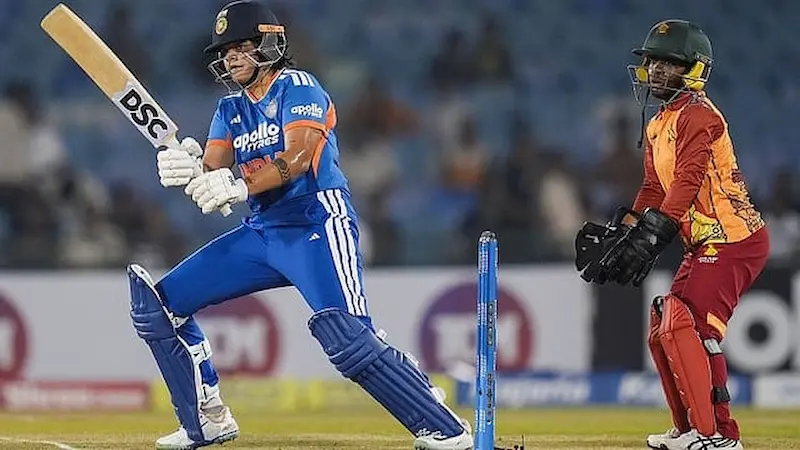
Shafali Verma’s batting technique is built upon quick reactions, confident footwork, rapid bat speed, and an ability to swiftly identify run-scoring opportunities. As an aggressive right-handed batter, she exerts pressure on bowlers by attacking deliveries that allow for powerful shots. However, her batting is not solely about hitting sixes; timing, balance, and the selection of the right deliveries to play are also crucial components of her game.
What Makes Shafali Verma’s Batting Different?
Shafali is known for her fearless approach at the crease. Instead of allowing bowlers to settle into a comfortable rhythm, she often looks to score early in the innings. Her attacking style can change the pace of a match, especially when she finds gaps and connects cleanly with the ball.
It is important to note that aggressive batting does not mean swinging the bat at every delivery. Before deciding whether or not to attack, a batter should assess the line, length, and speed of the ball.
READ MORE: https://sportstitanofficial.com/who-is-the-best-football-captain-of-all-time/
https://x.com/CricInformer/status/2111861037192650884?s=20
1. Quick Footwork Creates Better Contact
Footwork helps a batter reach the ball in a strong position. When a delivery is pitched up, moving towards the ball can help create a clean hitting opportunity. Against a shorter delivery, adjusting the feet and body position can make it easier to control the shot.
The Shafali Verma batting technique demonstrates why quick movement matters. Good footwork helps a batter stay balanced and bring the bat through the intended line. If the feet remain stuck, even a fast swing may produce a mistimed shot.
2. Bat Speed and a Full Swing
Executing a risky shot doesn’t just put the batter’s arms at risk. To generate bat speed, batters must coordinate the movements of their shoulders, arms, wrists, and other body parts. A fluid, rhythmic motion allows the bat to swing through the ball without the batter losing control.
Shafali’s attacking style shows how quickly a batter can turn a scoring opportunity into a boundary. For developing players, the lesson is to focus on a controlled swing and clean contact rather than trying to hit the ball as hard as possible.
3. Timing Matters More Than Raw Strength
A six is not always the result of maximum physical effort. When the bat meets the ball at the right moment, the shot can travel a long distance with less effort.
To improve timing, players can practice with gentle throwdowns before facing faster deliveries. The aim should be to watch the ball closely, keep the head steady, and make contact in front of the body when the shot requires it.
4. Reading the Bowler’s Length
Identifying the length of the ball helps the batter decide which shot to play. A full-length delivery might offer an opportunity to play a ‘drive,’ while a short-pitched ball could allow for a ‘pull’ or another aggressive shot. The choice of the right shot depends on the ball’s line, speed, and bounce, as well as the placement of the fielders.
One useful lesson from the Shafali Verma batting technique is that attacking intent works best when it is combined with decision-making. Trying to hit every ball for six can lead to unnecessary risks.
5. Balance Helps Keep the Shot Under Control
Balance is essential when a batter attempts a powerful stroke. If the body falls away too early or the head moves excessively, the bat may not meet the ball cleanly.
Players should practice finishing each shot in a stable position. This helps develop control and makes it easier to recover for the next delivery. Strong balance can also help batters adjust when the ball does not arrive exactly where they expect.
6. Smart Shot Selection Against Different Deliveries
Good batters do not rely on one shot alone. They assess the delivery and select a stroke that suits its length and direction. Sometimes the best decision is to defend, rotate the strike, or play along the ground instead of attempting a boundary.
This is particularly important during long innings. Taking singles and doubles helps maintain a rhythm and reduces the pressure to play an aggressive shot off every delivery. When a batter identifies a good ball to attack, playing an aggressive shot becomes a well-considered decision.
7. Practice Drills to Develop Power Hitting
Beginners can work on the fundamentals behind powerful batting with these simple drills:
- Shadow batting: Practice the complete swing without a ball, concentrating on balance and technique.
- Throwdown practice: Ask a partner to feed gentle deliveries so you can focus on timing.
- Footwork drills: Move forward and back in response to different lengths before playing the shot.
- Target hitting: Aim for selected areas rather than trying to hit every ball as far as possible.
- Controlled power practice: Begin at a comfortable pace and increase intensity only when contact remains consistent.
Use suitable protective equipment and practice in a safe space with proper supervision.
Common Mistakes to Avoid
Trying to hit every delivery for six is one of the biggest mistakes an aspiring power hitter can make. Other common problems include swinging too early, losing balance, ignoring the ball’s length, and relying only on arm strength.
The solution is to develop a repeatable technique. Start with control, improve timing, and gradually add power. Record practice sessions if possible, then review whether your head position, footwork, and follow-through remain stable.
Frequently Asked Questions
How does Shafali Verma hit powerful sixes?
She combines an attacking mindset with quick reactions, bat speed, timing, and suitable shot selection. The outcome also depends on the delivery and match situation.
Is strength necessary for hitting sixes?
Strength can help, but timing, balance, and clean contact are equally important. A technically sound swing can generate considerable power without excessive effort.
Can beginners learn power hitting?
Yes. Beginners should start with basic stance, grip, footwork, and timing drills before attempting repeated maximum-power shots.
What is the most important lesson from Shafali Verma’s batting?
The key lesson is to attack with intent while still judging each delivery carefully. Controlled aggression is more sustainable than trying to hit every ball for a boundary.
Conclusion
The Shafali Verma batting technique offers useful lessons for anyone interested in aggressive cricket batting. Quick footwork, coordinated bat movement, good timing, balance, and intelligent shot selection all contribute to powerful hitting. Young players can learn from these principles through regular practice, patience, and a focus on clean contact rather than power alone.