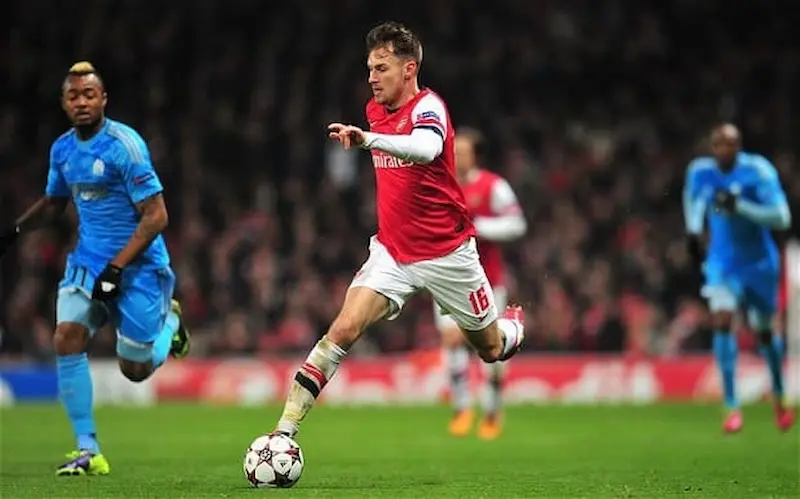
Top 3 Fastest Football Player of All Time – Ultimate Speed Guide
While ability, knowledge, and creativity have long been valued in football, few qualities thrill viewers more than incredible speed. A player can completely transform a game by speeding past competitors in a few of seconds. Excellent speed can often be the difference between winning and losing, whether you’re pursuing a through ball, leading aunterattack, or making a last-ditch recovery run.
Sports science changed the measurement of speed over time. Fans now have a better idea of how quick today’s stars are because to the exceptional accuracy with which modern monitorinofdevices measure sprint speeds. Only a small number of famous players have attained speeds that rank them among the quickest football players ever recorded, despite the fact that many of them were extremely fast.
In this article, we’ll rank the top 3 fastest football player of all time, examine what makes each player so explosive, compare their top speeds, and explore how their pace has influenced modern football.
READ MORE: https://sportstitanofficial.com/best-bowling-figures-in-odi/
https://x.com/TajudeenOlayin8/status/2076765303342518619?s=20
How Football Sprint Speed Is Measured
Before ranking the fastest players, it’s important to understand how football speed is tracked.
Professional leagues now use technologies such as
- GPS tracking systems
- Optical tracking cameras
- Performance analytics software
- Wearable athlete monitoring devices
Unlike track athletes running in straight lines, footballers sprint while changing direction, controlling the ball, reacting to opponents, and dealing with physical contact. That makes their recorded speeds even more impressive.
The greatest three football players of all time will be ranked in this article, along with an analysis of what makes each player so explosive, a comparison of their peak speeds, and an analysis of how their pace has shaped a present game.
Top 3 Fastest Football Player of All Time
1. Kylian Mbappé
Top Recorded Speed
38 km/h (23.6 mph)
Kylian Mbappé is regarded by many football analysts as the standard for explosive pace in today’s sport.
The French wonder maintains outstanding speed even when dribbling because of his blend of lightning-fast acceleration and superb ball control. Mbappé frequently reaches near-maximum speed while maintaining whole control of the ball, relative to many quick players who slow down when in possession.
Why Mbappé Is So Fast
His amazing speed is a result of several factors:
- The first few explosive steps
- Strong lower-body muscles
- Outstanding sprinting technique
- Long stride length
- Unpaid balance
It may be argued that his acceleration poses a greater risk than his top speed. Within the opening five meters of the race, defenders frequently lose.
Career Highlights
- FIFA World Cup victor
- Winner of the UEFA Nations League
- Several championships in domestic leagues
- One of the top-scoring attackers in Europe
His quickness has emerged as a key characteristic of contemporary attacking football.
2. Kyle Walker
Top Recorded Speed
37.8 km/h (23.5 mph)
In football history, Kyle Walker has always been regarded as one of the quickest defenders.
Walker’s speed is even more important since, in contrast to offensive players who mostly run forward, he regularly rushes back to halt defenses.
Throughout his career, his quick recovery prevented several goals.
What Makes Walker Special
Walker blends:
- Superior acceleration
- Amazing endurance
- strong building
- Awareness of protection
- Sprint stamina
Walker has consistently shown exceptional sprinting ability even after playing more than 80 minutes, despite the fact that many quick defenders lose pace late in games.
Defensive Impact
Because of his speed, he can:
- Regain your defensive stance
- Win races one-on-one
- Protect your teammates
- Quick wingers should be neutralized.
- Prior to defensively recovering, suppoattacks.
Over the course of his lengthy career, few defenders have been able to match his pace and consistency.
3. Gareth Bale
Top Recorded Speed
36.9 km/h (22.9 mph)
Gareth Bale was one of football’s most unstoppable runners prior to injuries affecting his latter years.
His spectacular dash against Barcelona in the Copa del Rey Final is still regarded as one of the best examples of pure pace in football history. Before scoring a historic goal, Bale memorably raced around the outside of defender Marc Bartra.
Strengths
Bale was given:
- Outstanding acceleration
- Long, strong strides
- Strength of body
- style of direct attacking
- Excellent finishing skills
In contrast to many speedy wingers, Bale possessed exceptional shooting, crossing, and aerial skills in addition to world-class pace.
Career Achievements
- Several championships in the UEFA Champions League
- Several national awards
- The all-time top scorer for Wales
- One of the best football players in Britain
One of the main reasons he became one of the most feared attackers in the world was his speed.
Speed Comparison
Rank Player Top Speed Position 1 Kylian Mbappé 38.0 km/h Forward 2 Kyle Walker 37.8 km/h Right Back 3 Gareth Bale 36.9 km/h Winger
What Makes a Footballer Extremely Fast?
Genetics isn’t the only factor in raw speed. Through years of dedicated preparation, elite football players build their speed.
Among the most important aspects are
Acceleration
A player’s victory in a race is sometimes determined by the first few steps.
Running Technique
Efficiency is increased and unnecessary movement is decreased with proper sprint technique.
Strength Training
Strong leg muscles generate explosive force during acceleration.
Flexibility
Players with good mobility may take longer, more effective strides.
Reaction Time
Players that make quick decisions can start running before their opponents do.
Conditioning
It takes extraordinary fitness to sustain peak pace for ninety minutes.
Why Speed Matters More Than Ever
Football nowadays is faster than it has ever been.
These days, teams mostly rely on:
- Fast transitions
- High-pressing
- Attacks in return
- Quick defensive recovery
- Broad-based offensive play
Pace has become one of the most important skills for both attackers and defense as tactics have changed.
Because explosive speed provides space and encourages opponents to make mistakes, even the world’s top technical players gain from it.
Are Faster Players Always Better?
Not always.
Many of the greatest football players in history weren’t the fastest.
Instead of relying just on sprint pace, players like Lionel Messi, Andrés Iniesta, Luka Modrić, and Xavi dominated via vision, positioning, intellect, and technical genius.
However, it presents a particularly challenging task for defenders when superb technical skill is paired with extraordinary speed, as seen by Mbappé or Bale.
Future Stars Who Could Challenge These Records
Amazing athletes are still produced by football. A number of current athletes have already achieved remarkable sprint speeds, and as technology advances, they may be able to surpass previous marks.
Future football players are more likely to push the boundaries of football speed since modern teams make significant investments in sports science, biomechanics, nutrition, and customized training.
Frequently Asked Questions
Who is the quickest football player in history?
With a maximum speed of about 38 km/h, Kylian Mbappé is largely considered the quickest football player based on widely reported match-recorded sprint speeds.
In football history, who is the quickest defender?
With a maximum speed of 37.8 km/h and remarkable recovery runs, Kyle Walker is regarded as one of the quickest defenders in history.
Did Gareth Bale outpace Cristiano Ronaldo in speed?
While both players were among the fastest of their time, Gareth Bale’s peak sprint speeds somewhat outpaced several of Cristiano Ronaldo’s recorded match speeds.
Top 3 Fastest Football Player of All Time
Conclusion
Three names regularly come to mind when talking about the top three quickest football players of all time: Gareth Bale, Kylian Mbappé, and Kyle Walker. Each has shown exceptional speed at the top level of the sport, employing speed as a tactical weapon in addition to an athletic quality.
Mbappé is one of the most dangerous attackers in contemporary football because of his quick acceleration. Bale’s legendary runs demonstrated how deadly pace can be when paired with power and finishing skill, while Walker’s incredible recovery speed has revolutionized what great defense looks like.
New stars may someday rewrite the record books as football develops further and performance tracking gets ever better. For the time being, these three athletes continue to stand as timeless representations of elite speed, showing that skill combined with rapid athleticism produces an unforgettable outcome.










1 thought on “Top 3 Fastest Football Player of All Time: The Speed Kings Who Changed the Game”