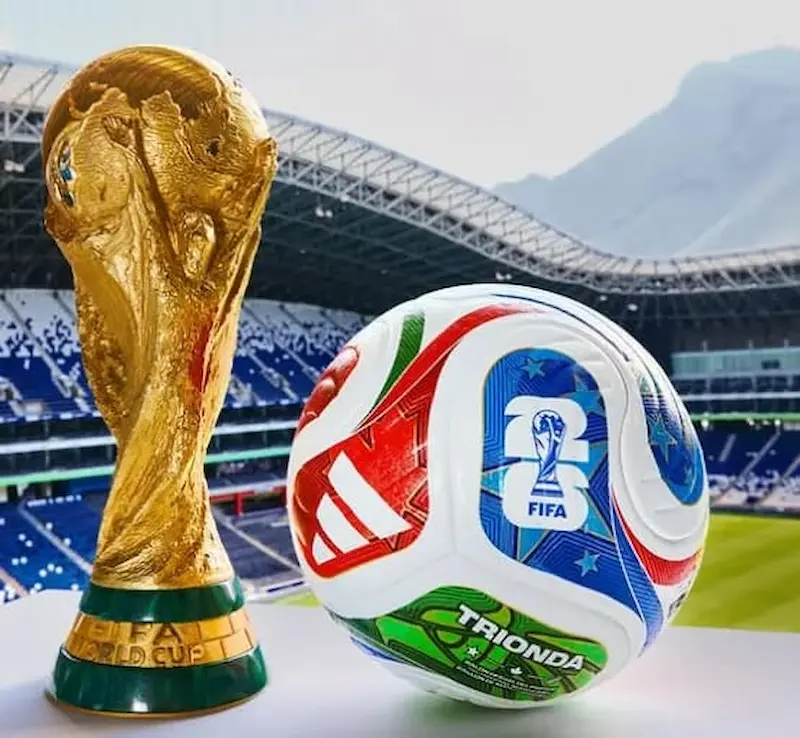
According to sportstitanofficial, the 2026 World Cup is shaping up to be one of the most significant editions in the tournament’s history. With an expanded format, three host nations, and a record number of participating teams, this event promises to redefine what a World Cup can be.
A New Chapter for the FIFA World Cup
The 2026 edition will mark the first time that three countries will jointly host the tournament. The United States, Canada, and Mexico have come together to stage an event unlike anything seen before in international football.
This arrangement reflects the growing popularity of football across North America. While the sport has traditionally been dominated by Europe and South America, recent years have seen remarkable growth in fan interest, infrastructure development, and investment throughout the region. FIFA’s decision to award hosting rights to these three nations highlights the sport’s expanding global footprint.
READ MORE: https://sportstitanofficial.com/ronaldo-networth-2026/
https://x.com/CitizenWitnesss/status/2068072329658175671?s=20
Why the 2026 Tournament Is Different
For decades, the World Cup featured 32 teams competing for football’s most prestigious trophy. In 2026, that number increases dramatically to 48 teams.
The new format opens the door for more nations to participate, giving countries from Africa, Asia, North America, Oceania, and other regions greater opportunities to qualify.
Football has become increasingly competitive worldwide. Many nations that once struggled to challenge traditional powers now possess talented players competing in elite leagues. The expanded format acknowledges this progress and allows more countries to showcase their abilities on the biggest stage.
More Teams, More Matches, More Drama
The increase to 48 teams naturally means more football for fans to enjoy.
The 2026 World Cup will feature 104 matches, making it the largest tournament ever organized by FIFA. The expanded schedule creates additional opportunities for thrilling encounters, surprise results, and breakthrough performances.
Fans will be treated to weeks of non-stop football as teams battle through the group stage and into an enlarged knockout phase. Every match will carry significant importance, with nations fighting to keep their World Cup dreams alive.
For supporters, the expanded tournament means more stories, more rivalries, and more unforgettable moments.
The Host Nations: A Continental Celebration
The geographical scope of the FIFA World Cup 2026 is among its most fascinating aspects.
United States
The United States will host the majority of matches and provide some of the tournament’s largest stadiums. Cities such as New York, Los Angeles, Dallas, Miami, Atlanta, Seattle, Houston, and Philadelphia are expected to become global football hubs during the competition.
Many of these venues regularly host major sporting events and possess the infrastructure needed to accommodate massive international crowds.
Canada
Canada’s involvement reflects the country’s growing football ambitions. The national team has experienced significant progress in recent years, while cities such as Toronto and Vancouver have developed strong football communities.
Hosting World Cup matches offers Canada an opportunity to further strengthen its position within the global football landscape.
Mexico
Few countries can match Mexico’s passion for football. Stadiums in Mexico City, Guadalajara, and Monterrey are expected to provide some of the tournament’s most electric atmospheres.
Mexican fans have long been recognized among the most passionate supporters in world football, and their enthusiasm will undoubtedly contribute to the event’s unique character.
The Favorites for Glory
Although qualification determines the final field of competitors, several nations are already viewed as leading contenders.
Argentina
The defending champions will arrive with confidence and high expectations. Argentina’s recent success demonstrated the importance of team chemistry, tactical organization, and mental resilience in major tournaments.
France
France continues to produce world-class talent at an extraordinary rate. With strength in every area of the pitch, they remain one of the most dangerous teams in international football.
Brazil
The country has an ability to keep producing amazing football players.
Brazil has been doing this for a time, and that is why Brazil is always a favorite team.
England
England has made steady progress in recent international competitions. With a talented squad and valuable tournament experience, many observers believe they possess the tools needed to challenge for the title.
Spain and Germany
Both nations have a proven record of success on the international stage. Their football cultures emphasize technical excellence, tactical intelligence, and long-term player development.
Emerging Nations Ready to Surprise
One of the most exciting elements of the expanded format is the opportunity for emerging football nations to make their mark.
The gap between established powers and developing football nations is narrowing, according to recent competitions.
The World Cup’s expansion may provide the ideal setting for a breakthrough narrative. A country that has previously had trouble qualifying can all of a sudden find itself in the knockout stages and gaining international recognition.
Such surprises are part of what makes the World Cup so special.
Technology’s Growing Influence
Modern football relies heavily on technology, and the 2026 tournament is expected to showcase some of the most advanced innovations yet.
Video assistant referee systems continue to evolve, helping officials make more accurate decisions. Advanced data tracking provides detailed insights into player performance, while broadcasters use cutting-edge production techniques to enhance the viewing experience.
Artificial intelligence, analytics, and real-time statistics are becoming increasingly important tools for coaches, analysts, and fans alike.
The 2026 World Cup will likely serve as a showcase for the future of football technology.
Economic and Cultural Impact
Beyond the football itself, the World Cup creates enormous economic opportunities.
Millions of visitors are expected to travel throughout North America during the tournament. Hotels, restaurants, transportation services, entertainment venues, and local businesses stand to benefit significantly from the influx of international supporters.
The event also generates substantial revenue through sponsorships, broadcasting agreements, merchandise sales, and tourism.
However, the true impact extends beyond financial figures. The World Cup creates cultural exchanges, strengthens international connections, and introduces millions of people to new destinations and traditions.
For host cities, the tournament represents a chance to present themselves to a global audience.
A Tournament for the Digital Era
Football fans today consume the sport differently than previous generations. Streaming platforms, social media networks, and mobile technology have transformed how supporters interact with the game.
The FIFA World Cup 2026 is expected to become the most digitally connected tournament in history.
Real-time highlights, interactive content, player interviews, behind-the-scenes footage, and advanced statistical analysis will allow fans to engage with the competition in ways that were unimaginable just a decade ago.
Whether watching from a stadium, a television, or a smartphone, supporters will be closer to the action than ever before.
Challenges of Hosting the Largest World Cup Ever
Organizing a tournament of this scale is not without difficulties.
The vast distances between host cities create logistical challenges for teams, officials, and traveling supporters. Coordinating transportation, security, accommodation, and scheduling across three countries requires extensive planning.
Player welfare will also be a key consideration, particularly given the increased number of matches and travel requirements.
Despite these challenges, the combined experience and resources of the host nations provide confidence that the tournament can be delivered successfully.
Why the World Is Excited
The anticipation surrounding FIFA World Cup 2026 is driven by several factors. The expanded format introduces new possibilities. The three-country hosting arrangement creates a unique international atmosphere. Advances in technology promise an enhanced fan experience. Most importantly, football itself has never been more global.
More nations now possess the talent and infrastructure needed to compete at the highest level. As a result, the competition is becoming increasingly unpredictable, which only adds to the excitement.
Fans are not simply waiting for another World Cup—they are waiting for a tournament that could redefine the future of international football.
Conclusion
The FIFA World Cup 2026 represents a historic turning point for the sport. With 48 teams, 104 matches, and hosts spread across the United States, Canada, and Mexico, it will be the largest and most ambitious World Cup ever staged. The tournament combines tradition with innovation, bringing together football’s rich history and its rapidly evolving future.
As nations prepare for qualification and supporters begin planning their journeys, excitement continues to build around what promises to be a remarkable event. Whether measured by scale, global reach, or competitive drama, FIFA World Cup 2026 has all the ingredients needed to become one of the most memorable sporting spectacles the world has ever seen.